Rosario (to the moon and back)
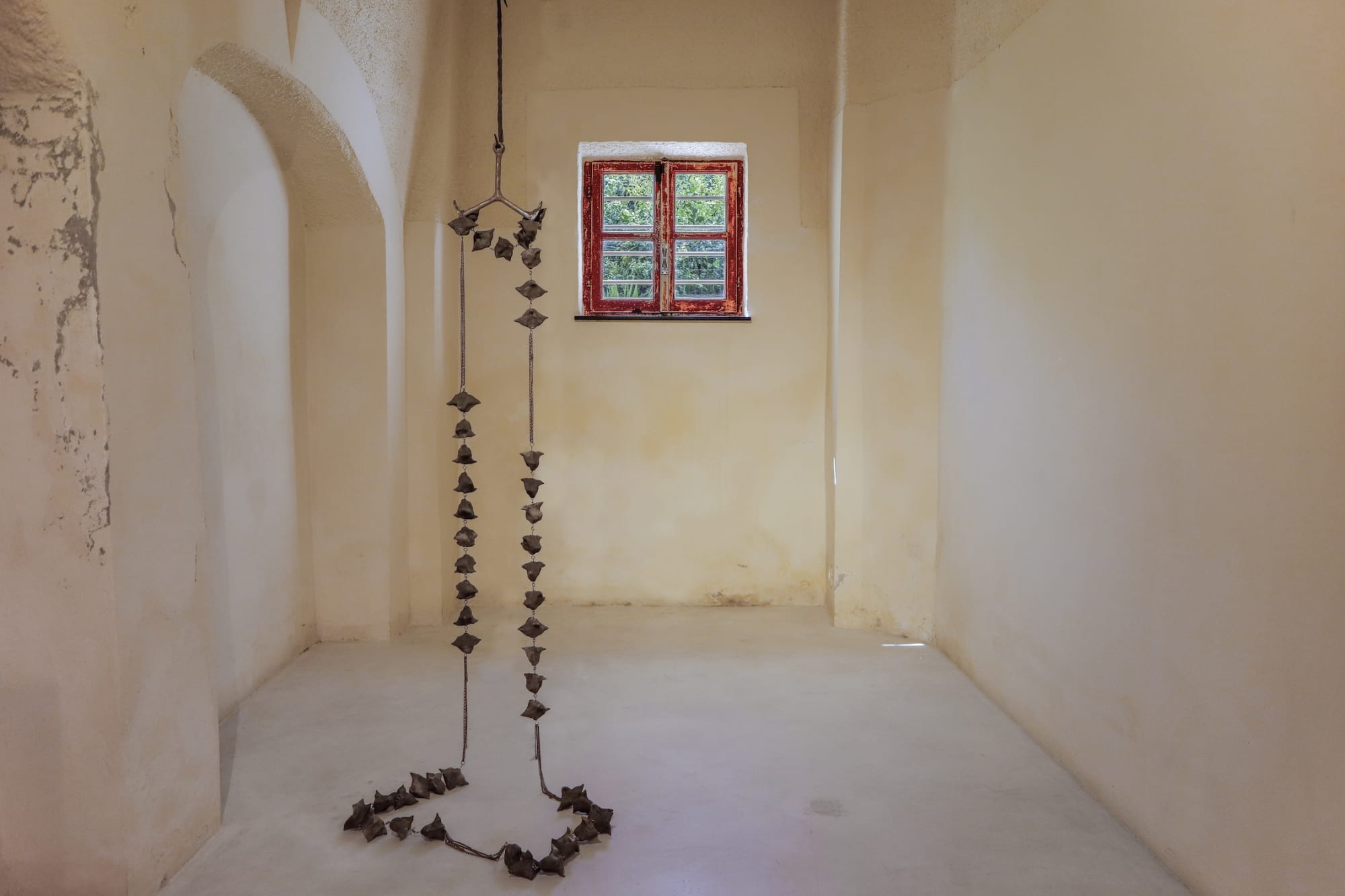
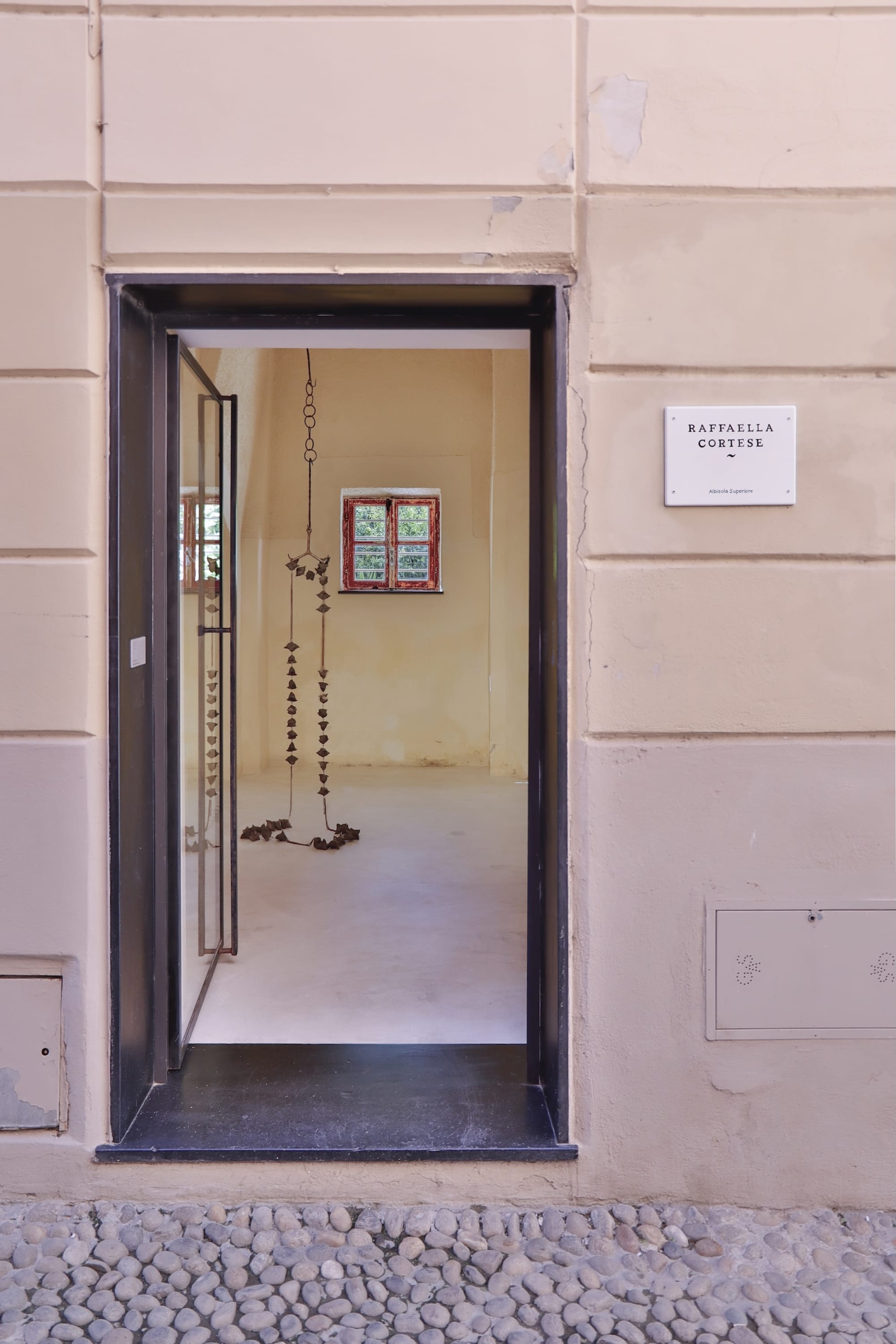
For the first time, Raffaella Cortese in collaboration with Triangolo, Cremona, presents the result of a residency and ceramic production project developed directly in Albisola, a place where ceramics remain a living part of everyday life and local history. Created in collaboration with Studio Ernan Design, a historic Albisola-based workshop founded in 1974 in continuity with the legacy of Ivos Pacetti, Nicole Colombo’s work takes shape through a process that intertwines the artist’s poetic language with the local identity and spirit.
On the occasion of the opening, on Saturday, May 16 at 11:00 AM, Nicole Colombo will be in conversation with Giovanna Manzotti, moderated by Gabriele Cordì, at Museo Trucco, Corso Filippo Ferrari 193, Albisola Superiore.
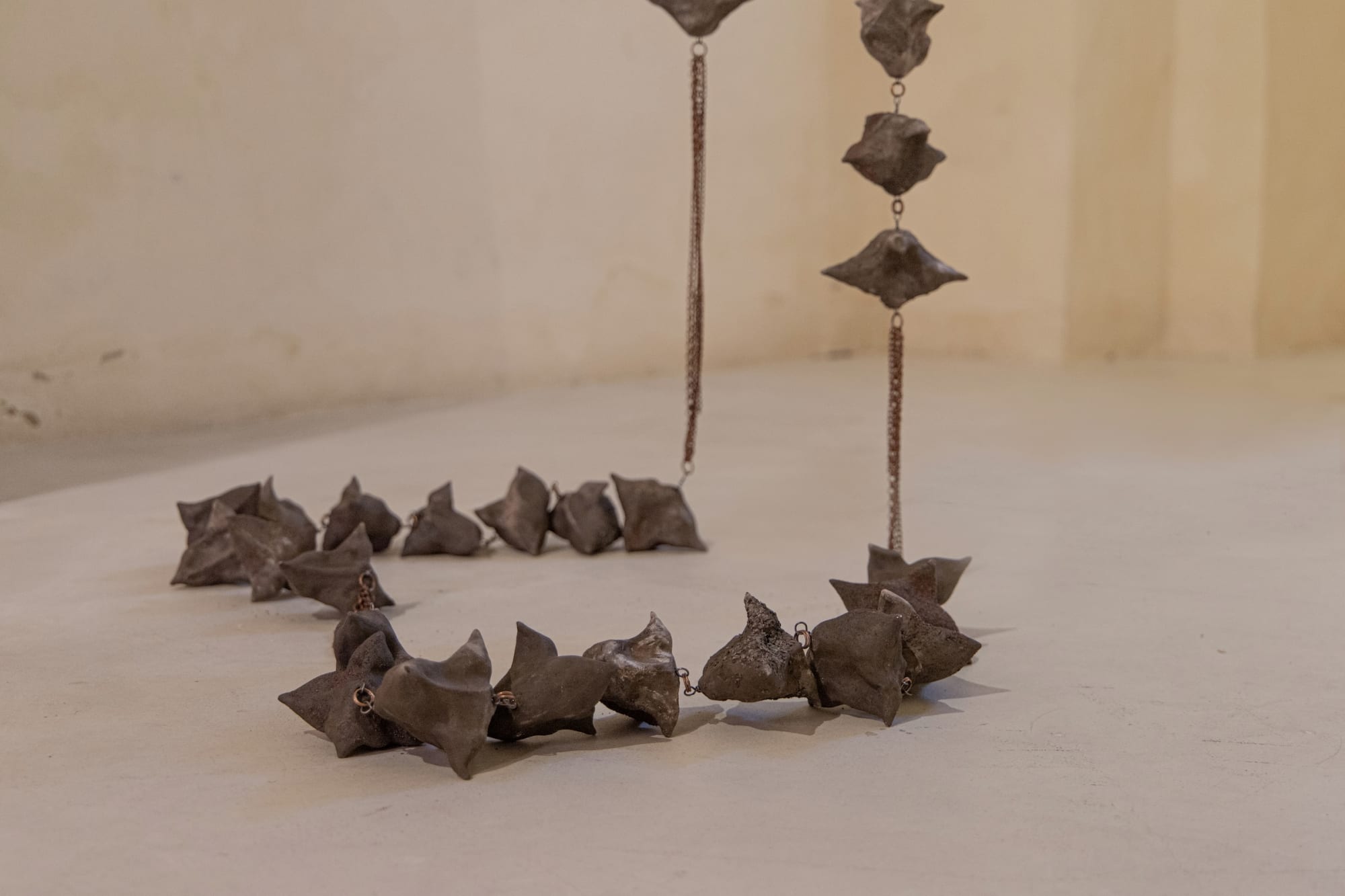
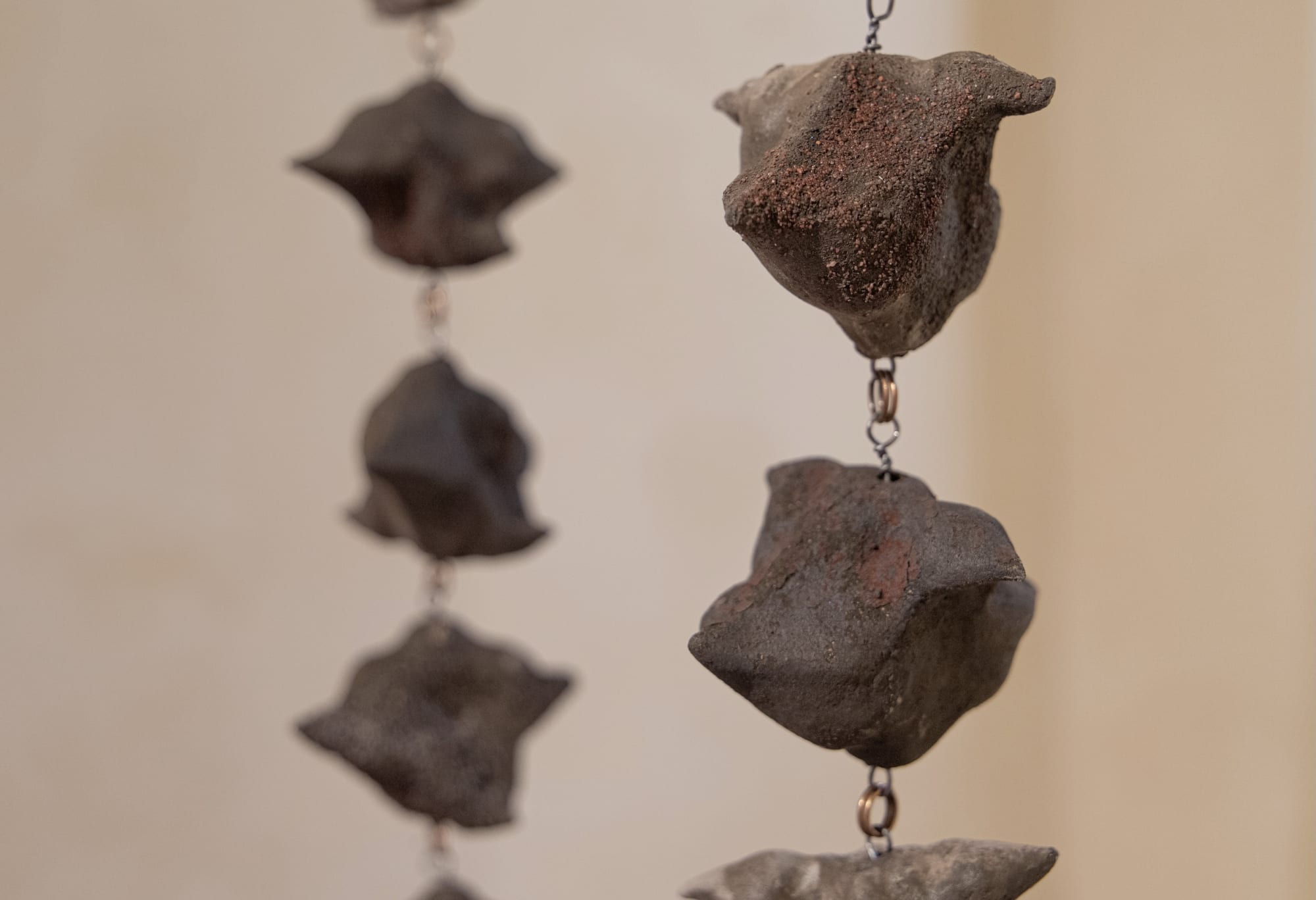
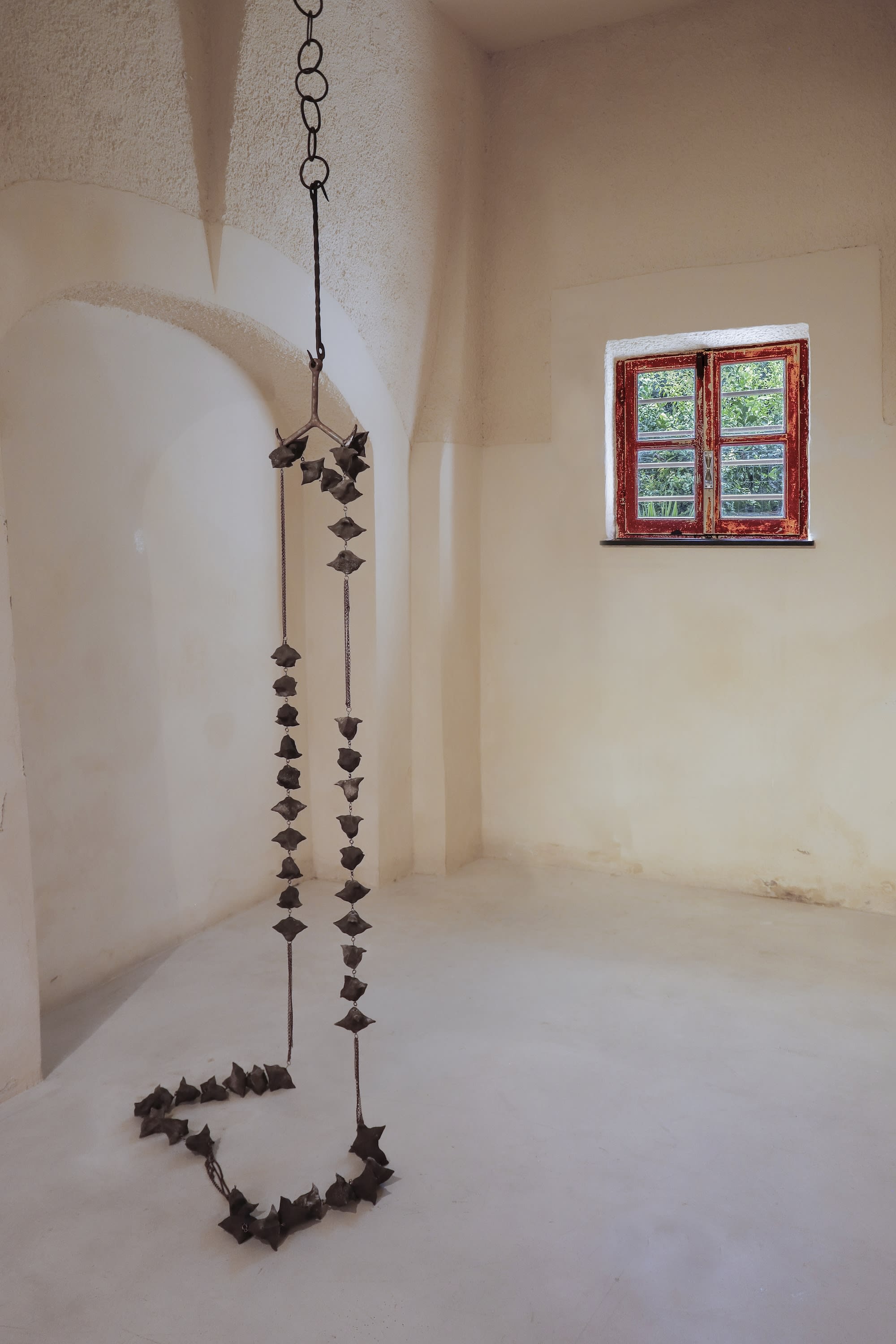
Starting from the structure of the rosary, the artist proposes an intimate reinter-pretation—though on a significant scale: a new configuration, almost domestic, inspired by this devotional form yet transforming it into a personal object. This rosary does not necessarily guide prayer; rather, it accompanies gesture, the memory of gestures, and the time of matter and its transformation. The work is composed of fifty elements, each individually crafted by combining black clay and metallic powders. Every “bead” undergoes a single firing, followed by a cold glazing with a transparent pigment developed by the artist herself. Metal and clay do not simply overlap but interact during firing, remaining distinct on the surface. Iron residues emerge from the terracotta matrix, generating a texture reminiscent of the formation of an iron mineral. The resulting material appears hybrid, almost alchemical.
The morphology of each element derives from the seed of the water chestnut (Trapa natans), a recurring figure in Nicole Colombo’s research and one that frequently appeared in European devotional traditions as early as the Middle Ages. In certain mo-nastic and missionary contexts—particularly those connected to Jesuit spirituality—these seeds were used to make rosaries or meditation objects due to their pointed shape and natural durability. The seed—dark and angular—possesses an almost archaic presence: its sharp tips resemble small horns or the profile of an animal. In many regions of Italy and across parts of Europe, it has traditionally been considered an amulet. Carrying it in one’s pocket or close to the body is believed to offer protection against the evil eye, seasonal illnesses, or rheumatic pain. Because of its unusual and resilient form, the water chestnut has often been interpreted as an apotropaic object, capable of absorbing or deflecting negative energies.
Here, the sculpture functions not only as a religious device but as a structure that measures time, repetition, and the concentration of gesture. The ritual dimension of making—repeating the same action fifty times, while no element is ever identical to another—creates a kind of material liturgy. From this sequence emerges a slow, circular rhythm: a way of returning to a more elemental dimension of existence, where the matter of earth and that of metal share the same genealogy.
Images courtesy the artist, Raffaella Cortese, Milan - Albisola and Triangolo, Cremona. Photo: Debora Maurelli